KE Fibertec Shares Textile Ventilation Knowledge with the Nuclear Industry
KE Fibertec UK recently had the opportunity to present our CIBSE-approved Textile Based Ventilation CPD to professionals from across the UK nuclear ventilation sector, through the National Nuclear Ventilation Forum's CPD Sub-group.
The online session was delivered by our Senior Technical Sales Engineer, Mark Berry, and provided an introduction to Textile Based Ventilation before looking specifically at where the technology could — and importantly, could not — be considered within a nuclear environment.
About the National Nuclear Ventilation Forum
The National Nuclear Ventilation Forum brings together people working across the UK nuclear ventilation industry to share knowledge, discuss challenges and learn from experience.
Its CPD Sub-group identifies subjects that could be of value to the wider industry and invited KE Fibertec to deliver the session after Textile Based Ventilation was identified as an area of interest.
The audience represented a particularly broad range of experience, from graduates through to senior engineers and industry leaders, making it a valuable opportunity to introduce textile air distribution to a highly specialised part of the ventilation sector.
Looking beyond the basics of textile ventilation
Mark began by introducing the principles and history of Textile Based Ventilation, before looking at the different ways air can be distributed through a textile duct system.
The CPD covered permeable materials, laser-cut perforations and directional nozzles, demonstrating how textile air distribution can range from very low-velocity air movement through to highly targeted airflow.
Fire performance was also considered, including the EN 13501 fire classification referenced within the presentation and a comparison of the behaviour of different textile materials when exposed to flame.
From there, the session moved specifically into the considerations that apply when looking at textile ventilation within a nuclear environment.
Where could Textile Based Ventilation fit within a nuclear site?
An important part of the discussion was recognising that Textile Based Ventilation is not a universal replacement for conventional ductwork.
The CPD deliberately distinguished between applications where textile air distribution could potentially offer advantages and those where it would not be appropriate.
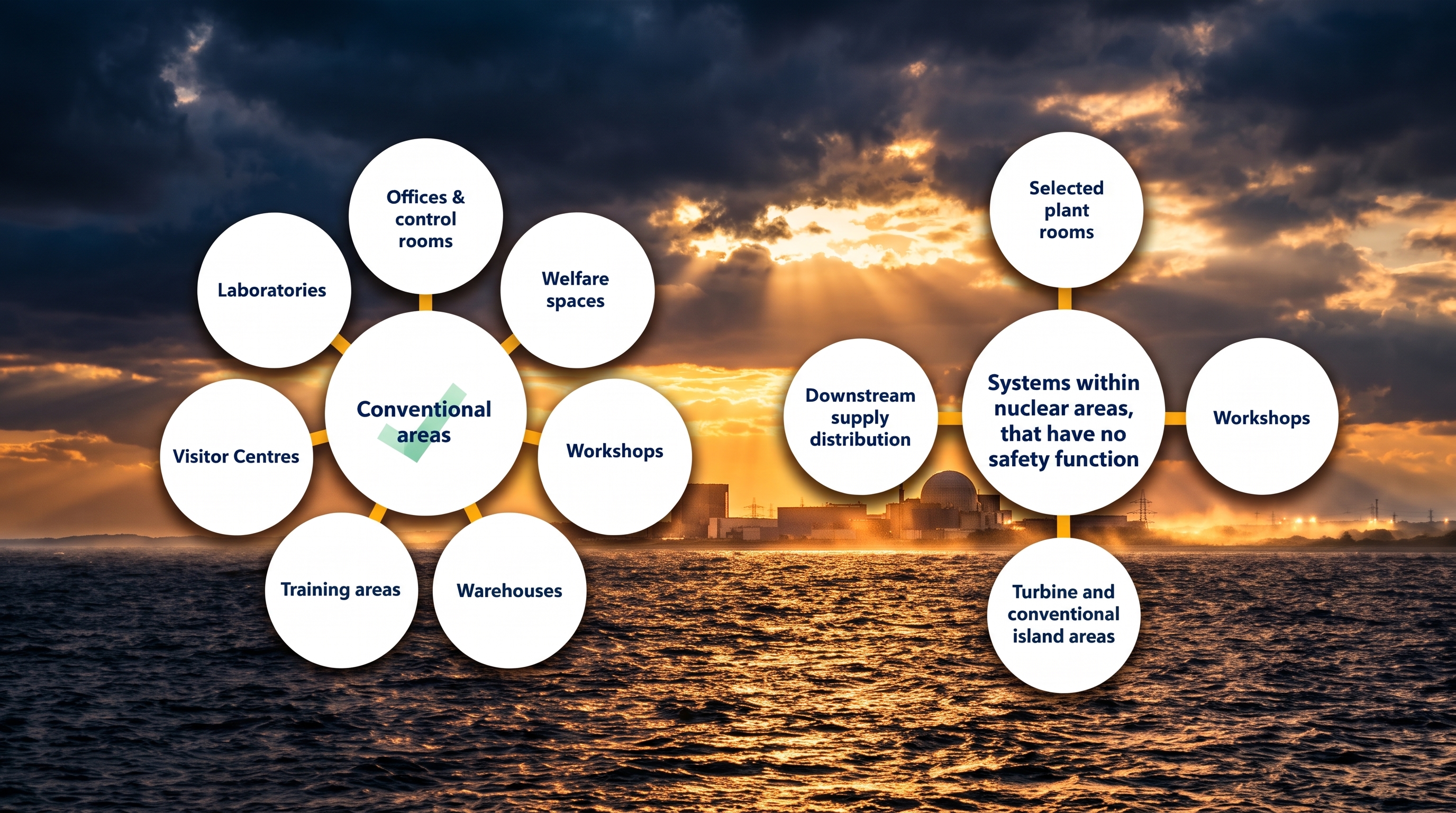
Examples highlighted as unsuitable included safety-classified containment systems, extract systems, filter trains, radioactive exhaust systems, areas requiring fire containment and systems requiring defined leak-tightness.
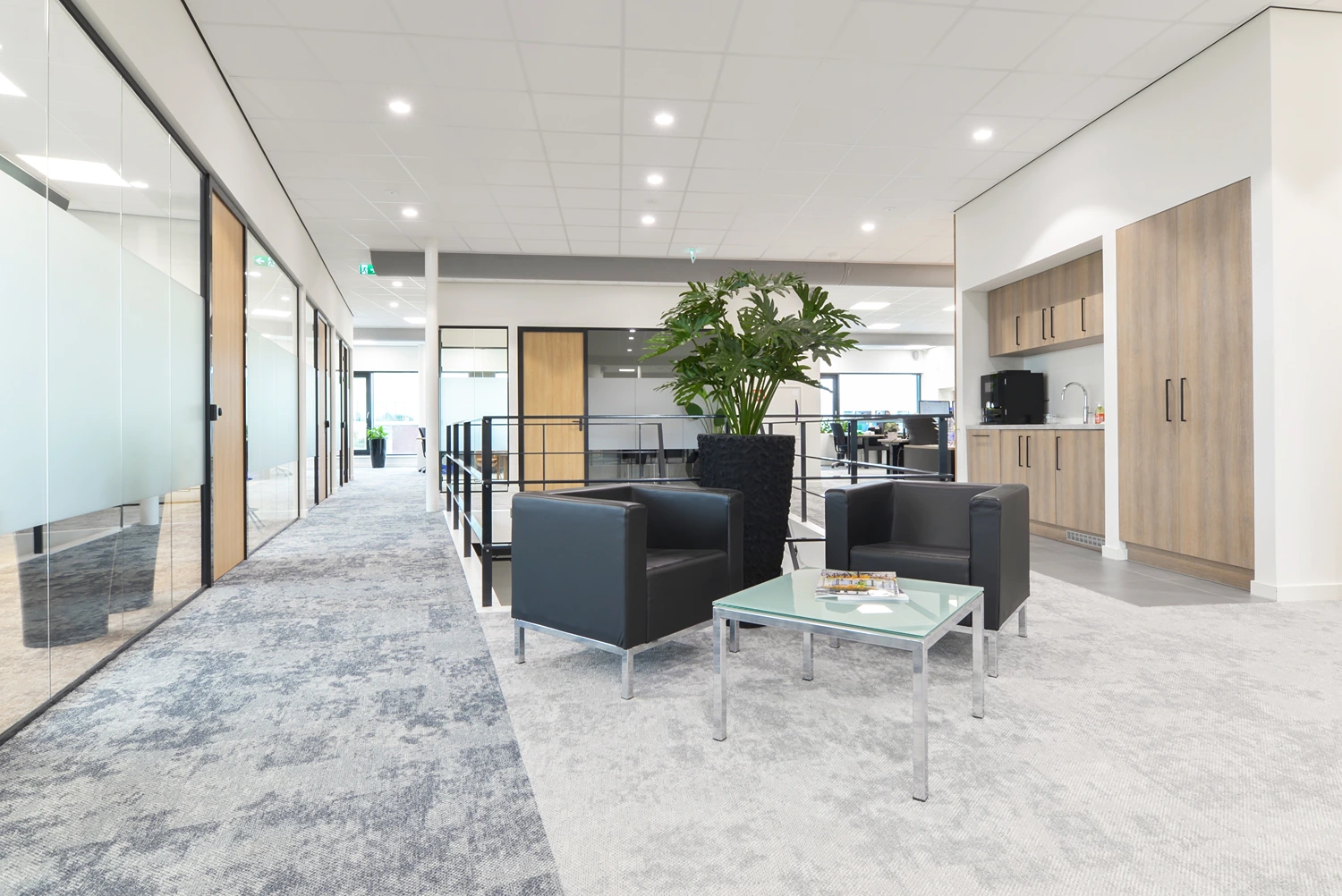
Instead, the discussion focused on potential applications within more conventional areas of a nuclear site, such as offices and control rooms, along with spaces where the particular characteristics of textile air distribution could be beneficial.
These could include applications requiring air to be delivered over significant distances while limiting stratification, distribution across a large floor area from high level, or situations where reducing the amount of high-level access required for maintenance could be advantageous.
The session also considered more application-specific possibilities, including targeted spot cooling and environments where reducing the opportunity for dust or oils to settle on the duct surface may be relevant.
Designing the system around the application
As with any Textile Based Ventilation project, suitability depends on understanding how the space will actually operate.
Mark took delegates through some of the information required to develop a textile air distribution design, including the required air volume, drawings, mounting heights and intended use of the room.
The presentation also demonstrated the design process and showed how the distribution method can be developed around the individual space rather than simply selecting a standard duct and outlet arrangement.
Relevant applications and case studies were used throughout the session to show how different air distribution principles can be applied in practice.
Looking at the complete system
The CPD concluded with a worked comparison between a Textile Based Ventilation system and an equivalent conventional ductwork arrangement.
Rather than looking only at the initial duct material, the example considered the wider system, including fittings, air terminals, mounting components, transport and installation.
The example was intended to demonstrate why comparisons between textile and conventional ductwork need to consider the complete installed solution rather than the cost of the duct alone.
An interactive approach to CPD
The session was designed to be interactive rather than following a traditional presentation followed by questions at the end.
Delegates were invited to respond anonymously to questions throughout the CPD, helping to encourage participation and providing opportunities to discuss the subject as the presentation progressed.
The formal presentation was followed by further discussion with attendees, giving us the opportunity not only to explain Textile Based Ventilation, but also to hear more about the particular requirements and considerations faced within the nuclear ventilation sector.
For us, that exchange of knowledge is one of the most valuable parts of delivering CPD to specialist industry groups.
Supporting knowledge sharing across the ventilation industry
At KE Fibertec UK, we regularly provide CIBSE-approved CPD sessions for consultants, contractors, engineers and other building-services professionals who would like to learn more about Textile Based Ventilation.
Presenting to the National Nuclear Ventilation Forum gave us an opportunity to introduce the technology to a new audience while being equally clear about its capabilities and its limitations.
That distinction is particularly important within highly engineered environments: the objective is not to suggest that textile ventilation is suitable everywhere, but to understand where its particular characteristics can offer a practical and effective solution.
Interested in arranging a CPD?
Our Textile Based Ventilation CPD can be delivered online or face-to-face and can be adapted to help make the discussion relevant to your organisation, industry or application.
Contact the KE Fibertec UK team to arrange a CPD session.










Are you ready to optimize your indoor climate?
Ready to save time on your next project. Fill out the form and be contacted within 24 hours. You will receive non-binding advice from our technical experts.