Can Textile Ducting Help Reduce HVAC Energy Costs?
Reducing the energy consumption of an HVAC system is often associated with selecting more efficient fans, heating equipment or cooling plant.
But producing conditioned air is only part of the process. That air still needs to be moved through the ventilation system and distributed effectively around the building.
This raises an important question: can the choice of air distribution system help reduce HVAC energy costs?
In the right application, textile air distribution can contribute to a more energy-efficient ventilation strategy. However, the potential saving comes from the design and operation of the complete system rather than simply replacing a length of steel ductwork with textile.
Why air distribution affects energy consumption
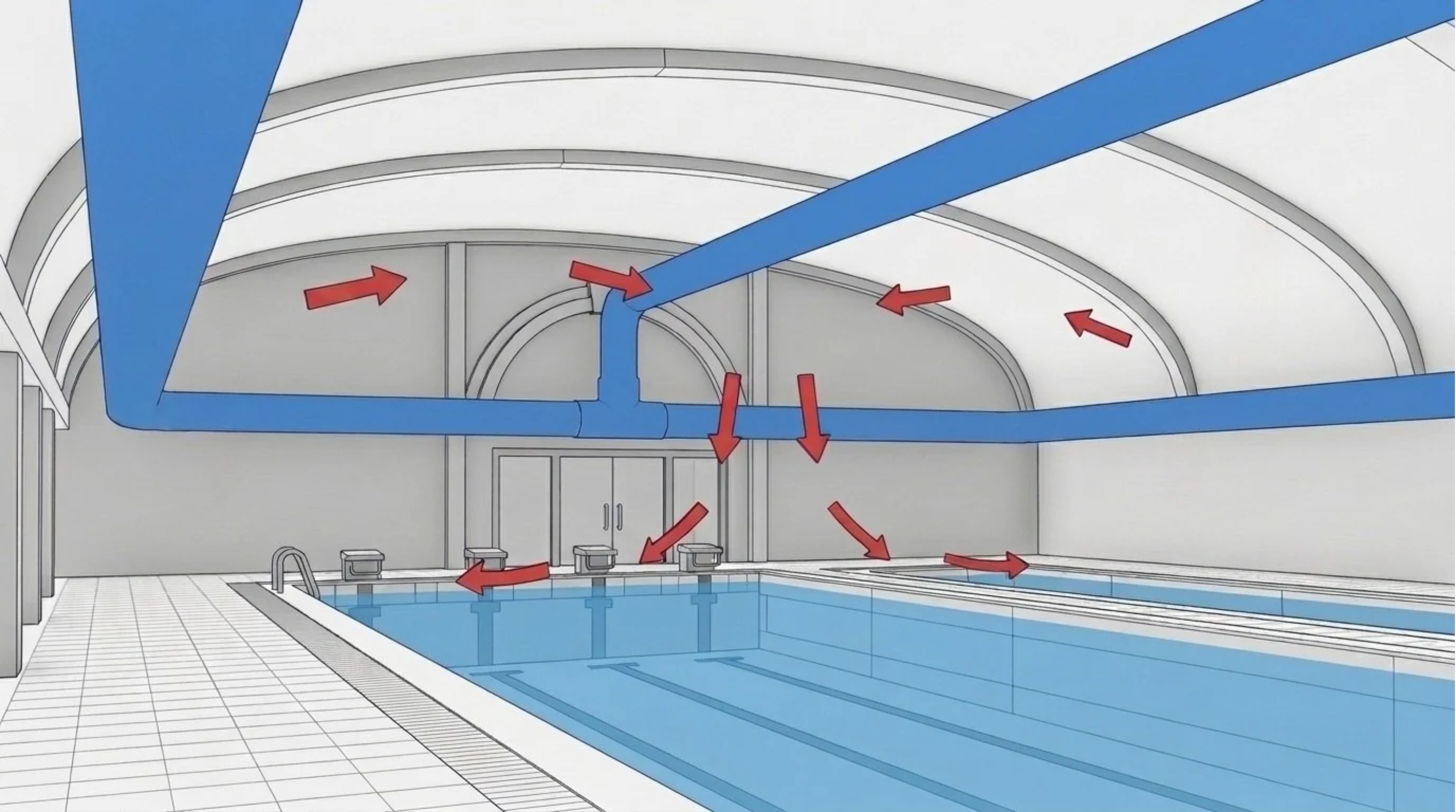
A ventilation fan has to overcome resistance throughout the air distribution system.
Every duct, fitting, damper and air terminal contributes to the total pressure the fan needs to generate. The greater that resistance, the more fan energy may be required to move the required volume of air.
Textile Based Ventilation combines air transport and air distribution within the same system. Depending on the design, textile ducts can provide relatively low pressure losses while distributing air through the textile surface, laser-cut perforations or directional nozzles.
Our systems are therefore designed around the required airflow, available pressure and air distribution pattern rather than considering the duct independently from the rest of the HVAC system.
Getting more from the air you are already conditioning
Energy efficiency is not only about fan power.
There is little value in heating or cooling air efficiently if it does not reach the areas where it is actually required.
A carefully designed textile air distribution system can distribute conditioned air evenly throughout a space, helping to avoid areas receiving too much air while others receive too little.
This can be particularly relevant in large industrial buildings, warehouses and other high spaces, where poor air distribution can contribute to temperature differences and unnecessary conditioning of areas that do not need it.
The objective is to use the available airflow as effectively as possible.
High induction and effective mixing
Many textile air distribution systems use induction as part of the air distribution principle.
Air leaving the textile duct draws surrounding room air into the supply airstream. This increases the total amount of air moving within the space without increasing the volume of conditioned supply air produced by the air handling unit.
The resulting mixing can help produce more even room conditions and reduce localised temperature differences.
High induction does not itself mean that a system automatically consumes less energy, but it can help conditioned air perform more effectively once it enters the room.
The opportunity for zone ventilation
Not every part of a large building necessarily needs to be treated in exactly the same way.
In suitable applications, textile air distribution can be designed around specific occupied or process zones rather than attempting to create identical conditions throughout the complete building volume.
Our industrial ventilation solutions can be configured for energy-efficient zone ventilation, allowing the air distribution strategy to concentrate on the areas where environmental conditions are actually important.
For large or high-volume buildings, this can be particularly valuable because conditioning an entire space unnecessarily can represent a considerable energy demand.
Maintaining the correct pressure and permeability
The textile material itself also forms part of the engineering design.
Different textile materials have different levels of permeability – the amount of air that can pass through the fabric. At KE Fibertec, our materials are permeability-stabilised so that the air passage remains predictable and can be incorporated into the system design.
This matters for energy use.
If a material becomes significantly less permeable than intended, greater resistance can be introduced into the system. Conversely, material that is too open may not maintain the pressure required for the duct to operate correctly.
Selecting the correct material and maintaining it throughout its working life therefore helps the ventilation system continue operating as designed.
Maintenance still matters
No ventilation system remains completely maintenance-free.
Dust and contaminants can accumulate within both textile and conventional ventilation systems over time. If airflow paths, filters, dampers or textile surfaces become restricted, the system may have to work harder to deliver the required airflow.
Regular inspection and appropriate cleaning help textile ducts maintain their permeability and air distribution performance.
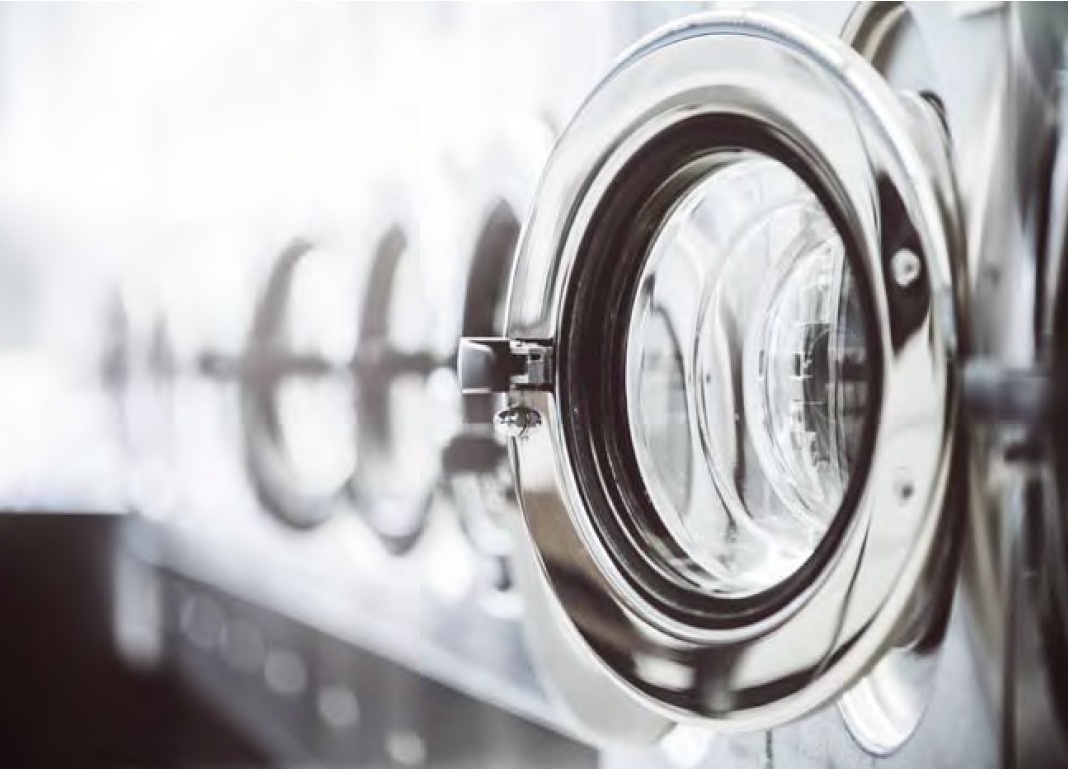
One advantage of textile ducting is that the duct can be removed and washed. Correct maintenance can therefore help maintain system efficiency while also extending the working life of the textile duct.
What about heating and cooling?
Effective air distribution becomes even more important when the same system is being used for both heating and cooling.
Cool and warm supply air behave differently within a room. A system that performs well in cooling mode is not automatically optimised for heating.
Mounting height, supply temperature, air velocity, outlet design and room geometry all need to be considered.
Designing around both operating conditions can help ensure that conditioned air reaches the occupied zone effectively throughout the year rather than allowing heating or cooling energy to be wasted in the wrong part of the building.
So, how much energy can textile ducting save?
There isn't a single percentage that can accurately be applied to every project.
The potential saving depends on the complete HVAC system, including:
- Required airflow
- System pressure
- Fan efficiency
- Duct layout and fittings
- Air distribution method
- Heating and cooling temperatures
- Building height and geometry
- Occupancy
- Control strategy
- Operating hours
- Maintenance condition
For this reason, we would not suggest that simply choosing textile ducting automatically reduces an HVAC system's energy consumption by a fixed amount.
The real opportunity comes from designing the air distribution system to use the available airflow and pressure efficiently while delivering conditioned air where it is actually needed.
Designing the complete air distribution system
At KE Fibertec, every Textile Based Ventilation system is designed around the individual application.
Using our TBV design tools, we consider the required airflow, pressure, room dimensions, mounting position, temperatures and required air distribution pattern before determining the textile material, duct dimensions and outlet configuration.
This means the air distribution system can be considered as part of the overall HVAC design rather than simply as the final component through which the air passes.
In the right application, that approach can help reduce unnecessary pressure losses, improve the effectiveness of conditioned air and contribute to a lower-energy ventilation strategy.
Want to explore the energy performance of your ventilation design?
If you're considering Textile Based Ventilation for a new project or looking at ways to improve an existing air distribution system, our technical team can help assess the application and develop an appropriate design.
Contact the KE Fibertec UK team to discuss your project.








Are you ready to optimize your indoor climate?
Ready to save time on your next project. Fill out the form and be contacted within 24 hours. You will receive non-binding advice from our technical experts.