

Sports and leisure
Textile-based ventilation meets the high requirements for indoor climate in buildings in sports and leisure. The solution ensures a smooth and draft-free air distribution, which creates comfort for both athletes and spectators — even in halls with high ceilings and varying levels of activity.

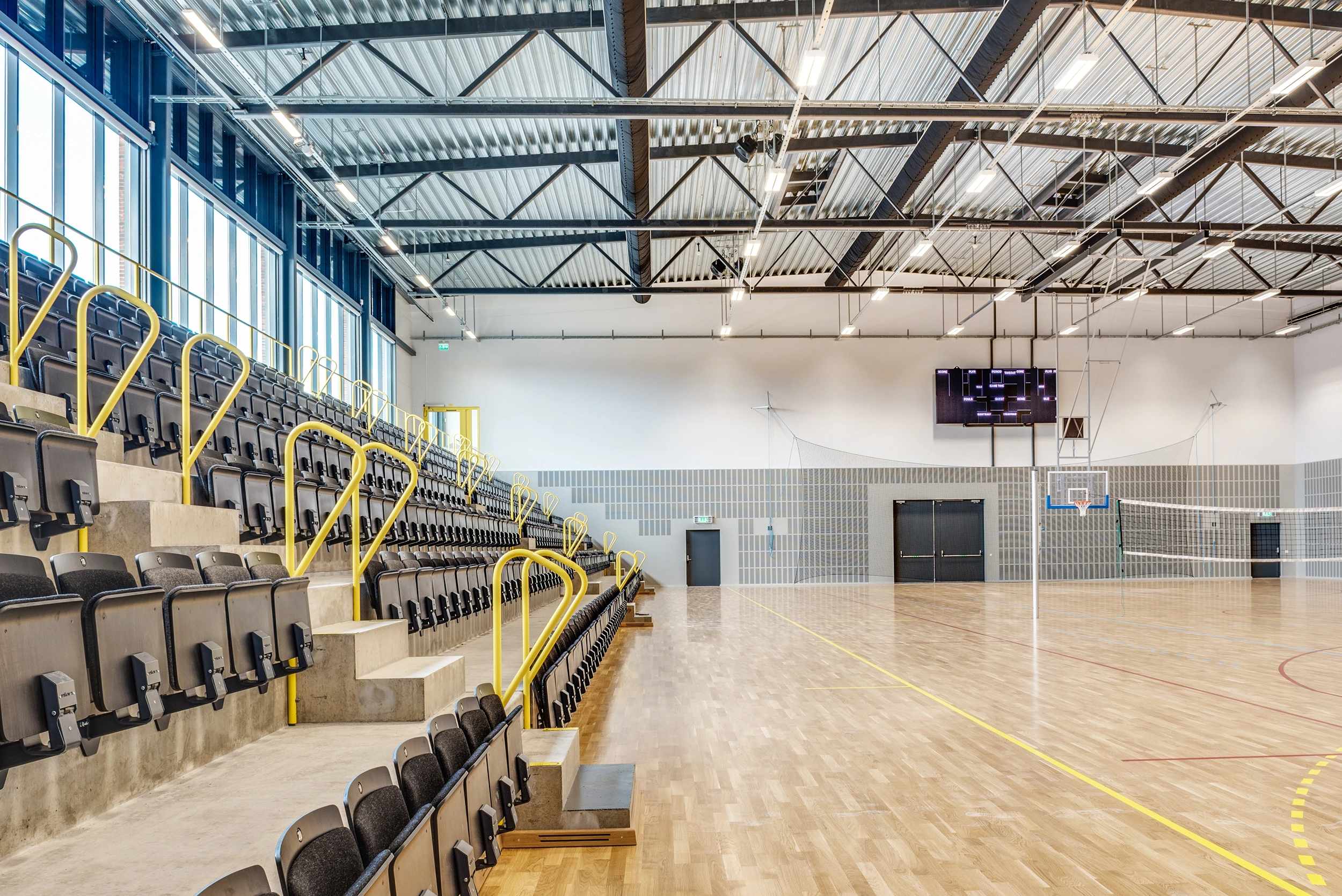
When ventilation makes a noticeable difference
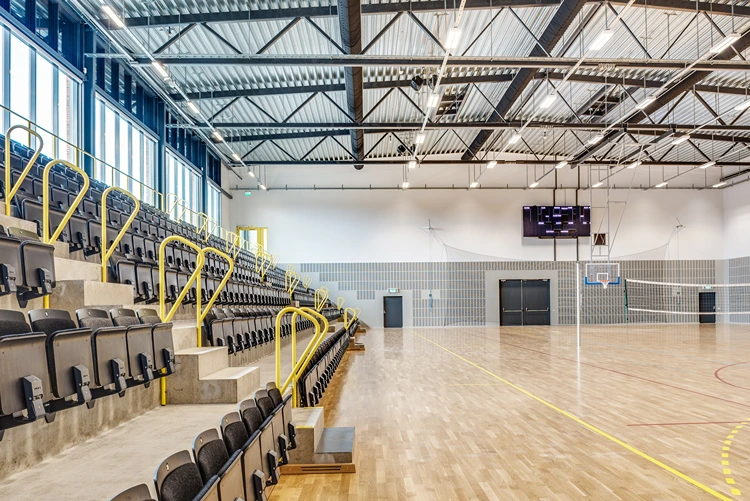
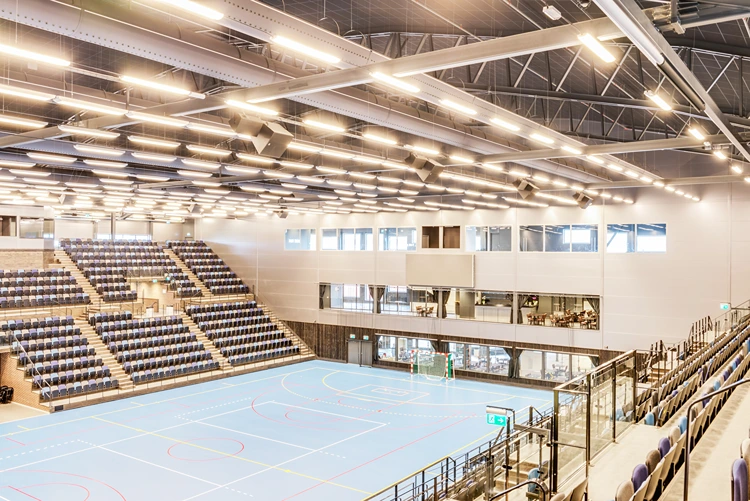
Textile ducts are the ideal solution for heating and ventilation in sports halls. With KE Fibertec's many years of experience, you get an energy-efficient system that ensures optimal air distribution — both during daily training and in crowded stands. The entire hall, including the spectator areas, is heated and ventilated efficiently, without drafts and without compromising comfort.
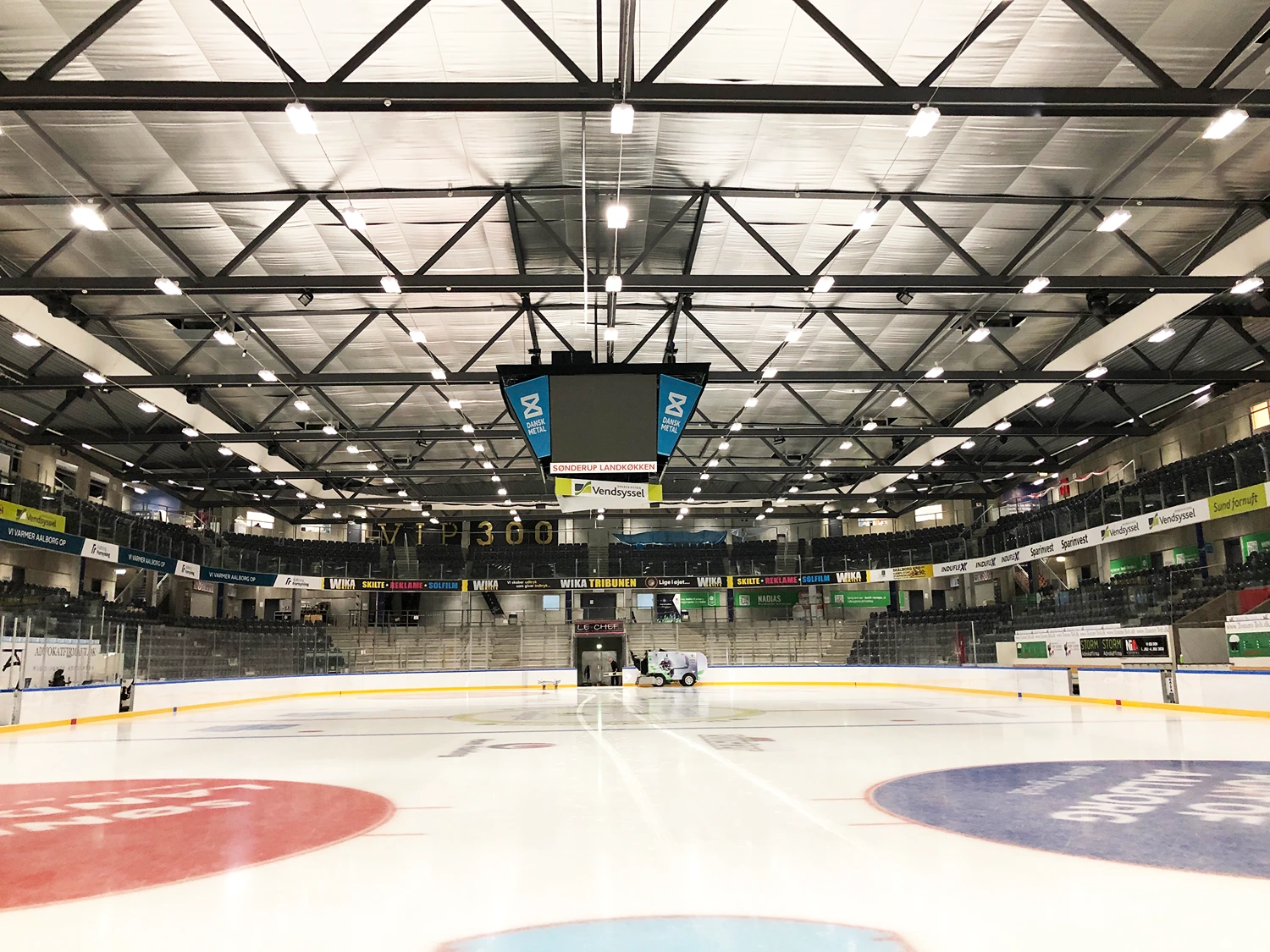
Special requirements for the indoor climate in ice hockey halls

The large temperature difference between the ice surface and the surrounding air creates a risk of condensation and high moisture load on structures. Ventilation must effectively control humidity to protect the building and ensure clear views.
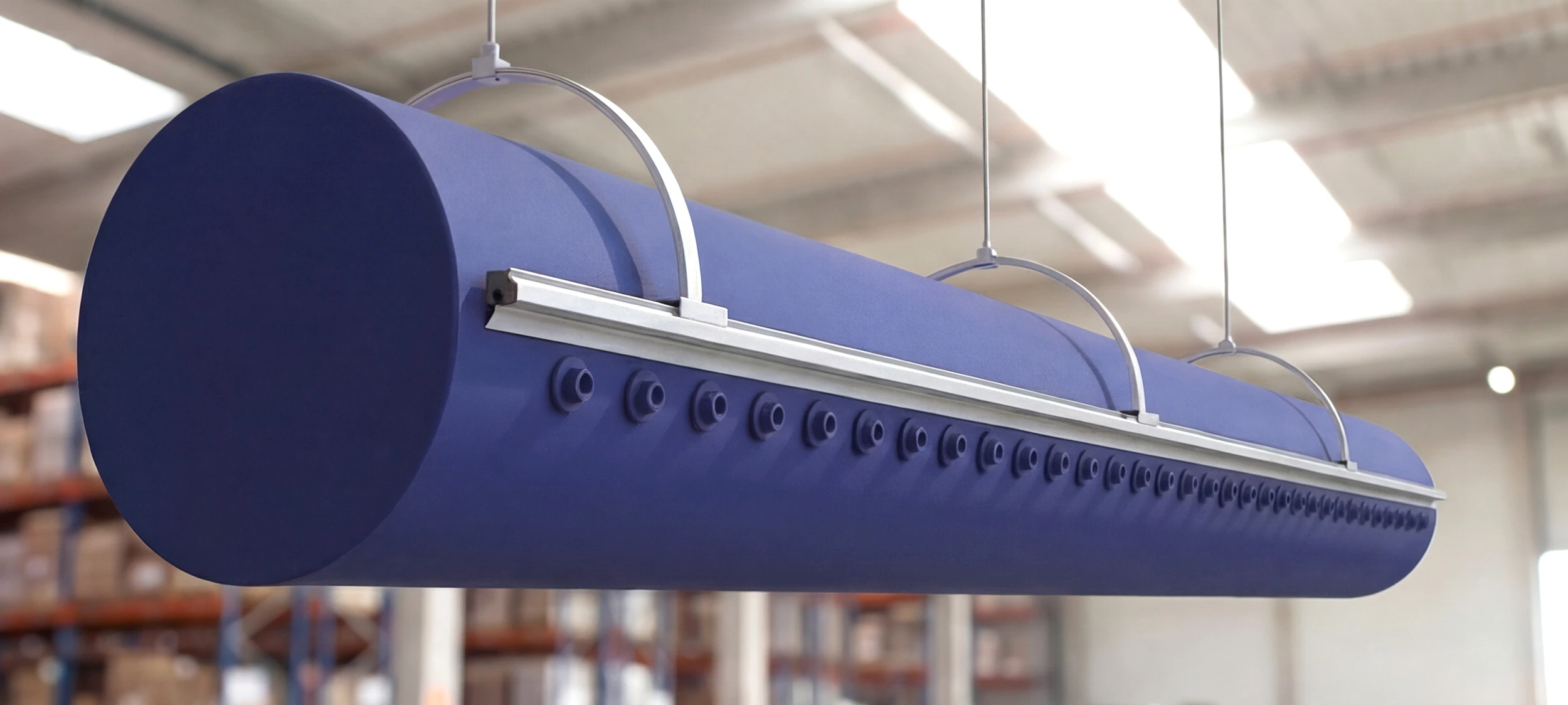
There is a marked difference in temperature at the ice, in the stands and under the ceiling. Without proper air distribution, ice level drag and heat accumulation under the roof can occur. With the KE-Direjet, the air can be controlled 100% with nozzles and differential air volumes.
Ice hockey halls have high energy consumption for both cooling systems and ventilation. The system must therefore be carefully dimensioned so that air volumes and air distribution support the quality of the ice without unnecessary energy loss.
Comfort for players and audience Players need stable and cool air at the ice, while spectators expect comfortable temperature without drafts. Textile-based ventilation can handle both needs simultaneously.
The load varies from training to matches with full stands. The management strategy must be able to adapt ventilation and air volumes according to activity and number of people in the hall.
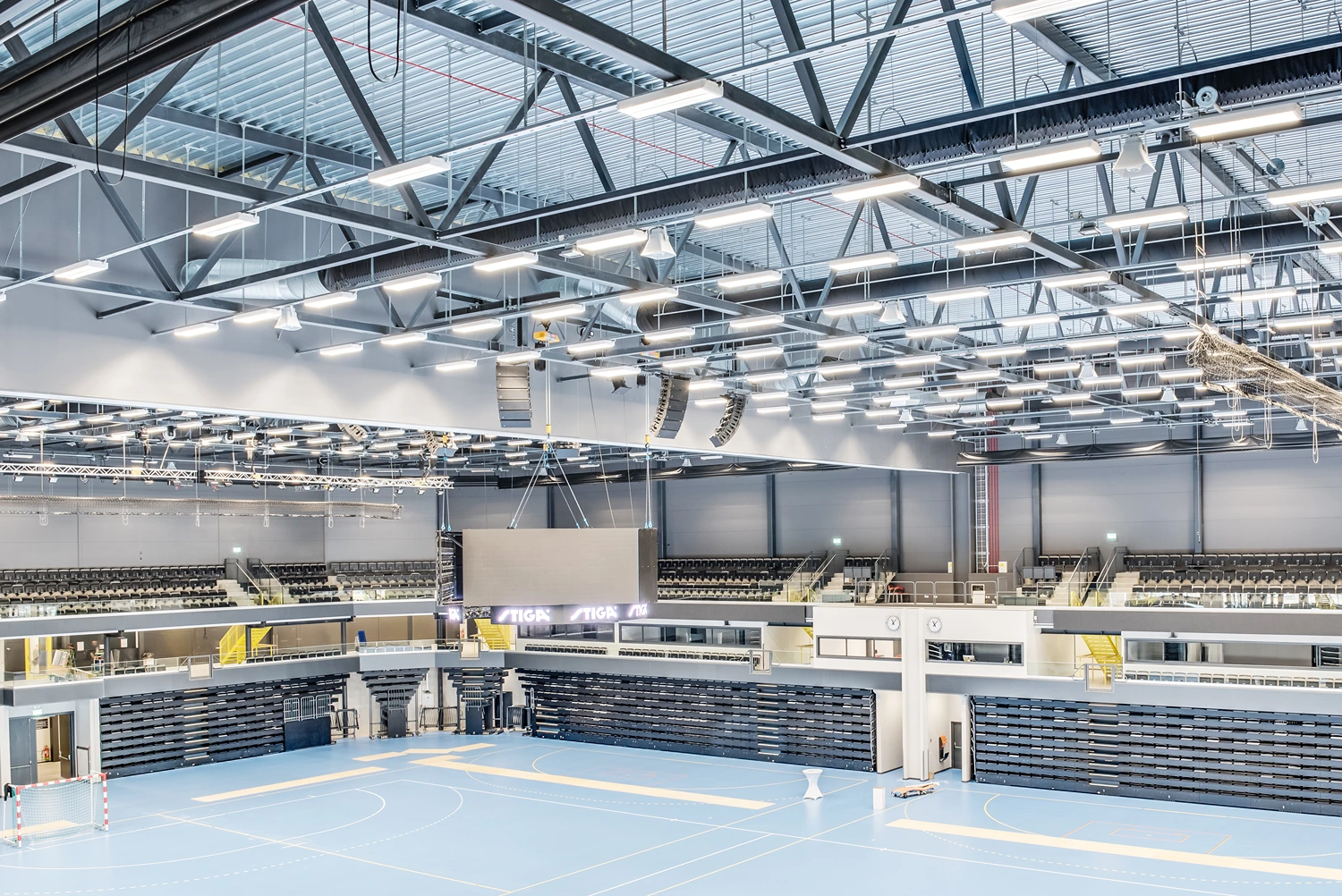
Comfort, health and energy-efficient operation are the focus
First of all, the system must ensure adequate air exchange so that CO₂, moisture and odors are effectively removed — both during daily training and at events with many spectators.
In addition, a modern sports hall requires flexible control, so that the ventilation can be automatically adapted to changing applications — from regular training to rallies and matches with full stands, where the system is adapted according to several operating strategies.
Air must not blow directly into the playing area or create a nuisance to performers and the audience. At the same time, the temperature must be kept stable so that cold zones do not arise at the floor or heat accumulation under the ceiling.
Too high humidity can affect both comfort and building construction, while too dry air can cause inconvenience to users. The ventilation must therefore be able to be precisely regulated according to activity and load.
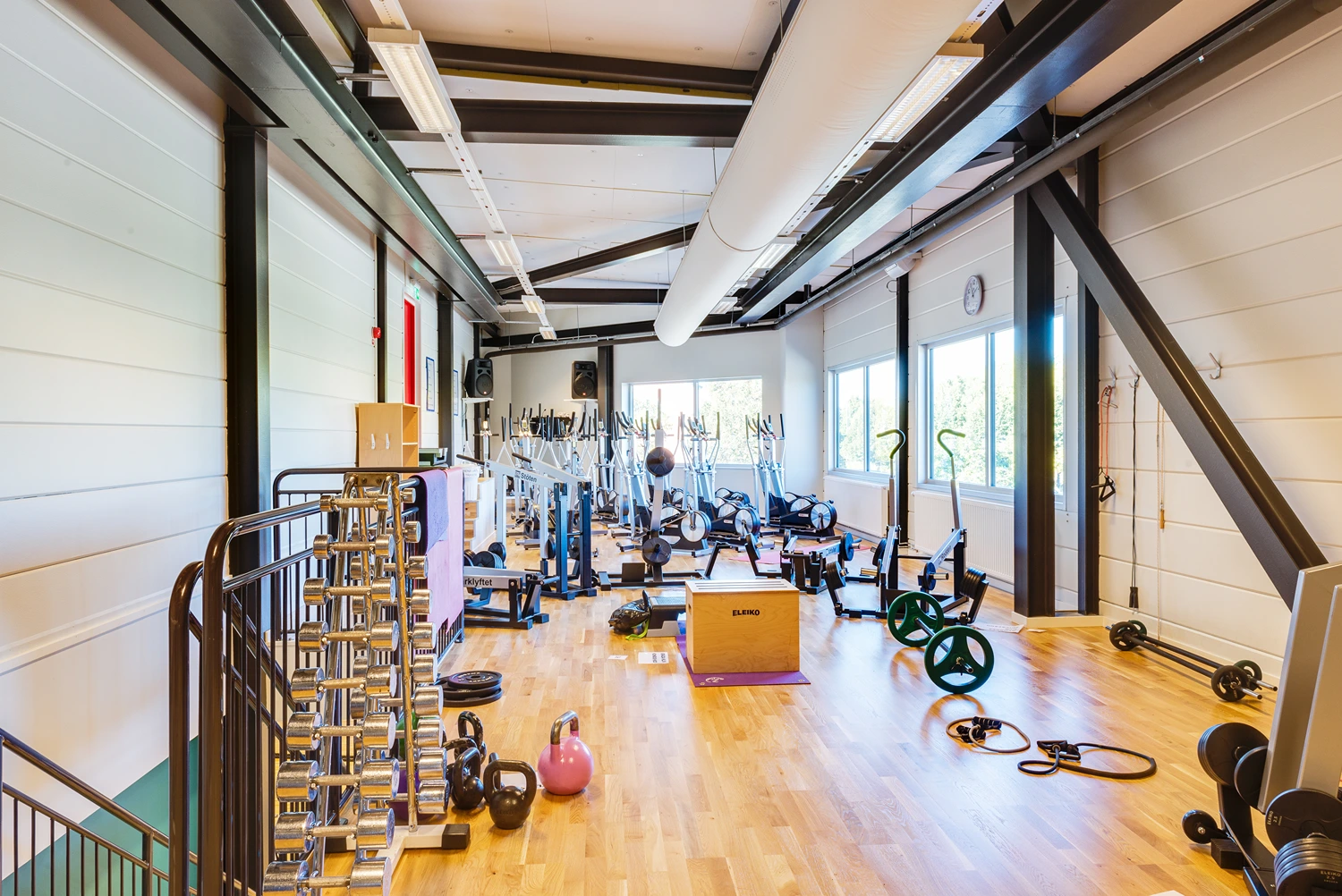
When experience and technique create the optimal solution
KE Fibertec has provided textile-based ventilation for many different installations in sports and leisure
Materials are approved according to the latest Danish fire standards
A total solution for cooling, ventilation and heating
Layout customizable on dimensions and architecturally with multiple system and color options
Lower construction costs compared to conventional systems
Get sparring for your next ventilation project
If you also want to hear more about textile-based ventilation and the benefits it can bring in your next project, you can send us an inquiry - absolutely without obligation.
We are ready with advice and sparring on how you can ensure optimal and good indoor climate for your construction project. You will be contacted for further dialogue about your needs and requirements, so that we will find the best solution for your project.
.png)
Need some inspiration?
Order the inspiration brochure today and find relevant information about our solutions and services - everything from design, system to how we can help with maintenance.