
Want quotes for your project?
Submit your inquiry with a brief description of your project. Then we will get back to you for more information and prepare an offer for you.
FAQs
Do you have any more questions? Write to us.
Find answers to most of what you need to know here or contact us directly for further help and guidance.
By adding the air directly in the sub-temperature living zone, efficient heating and cooling is achieved without oversized ventilation volumes. It can reduce the energy consumption of the cooling and heating system by up to 30% and at the same time minimize the need for expensive steel equipment.
A textile-based ventilation system is lighter both in the weight of the material and when assembled. This means significantly shorter assembly time — up to 9 times faster in fact. It simultaneously jaws less energy to achieve the same throwing length. Including the assembly time, it provides significantly lower operating and construction costs than traditional steel solutions.
The nozzles limit the induction of room air, so the air loses speed slower. The result is longer throwing length and deeper thermal penetration, ensuring that both hot and cold air are accurately distributed throughout the room.
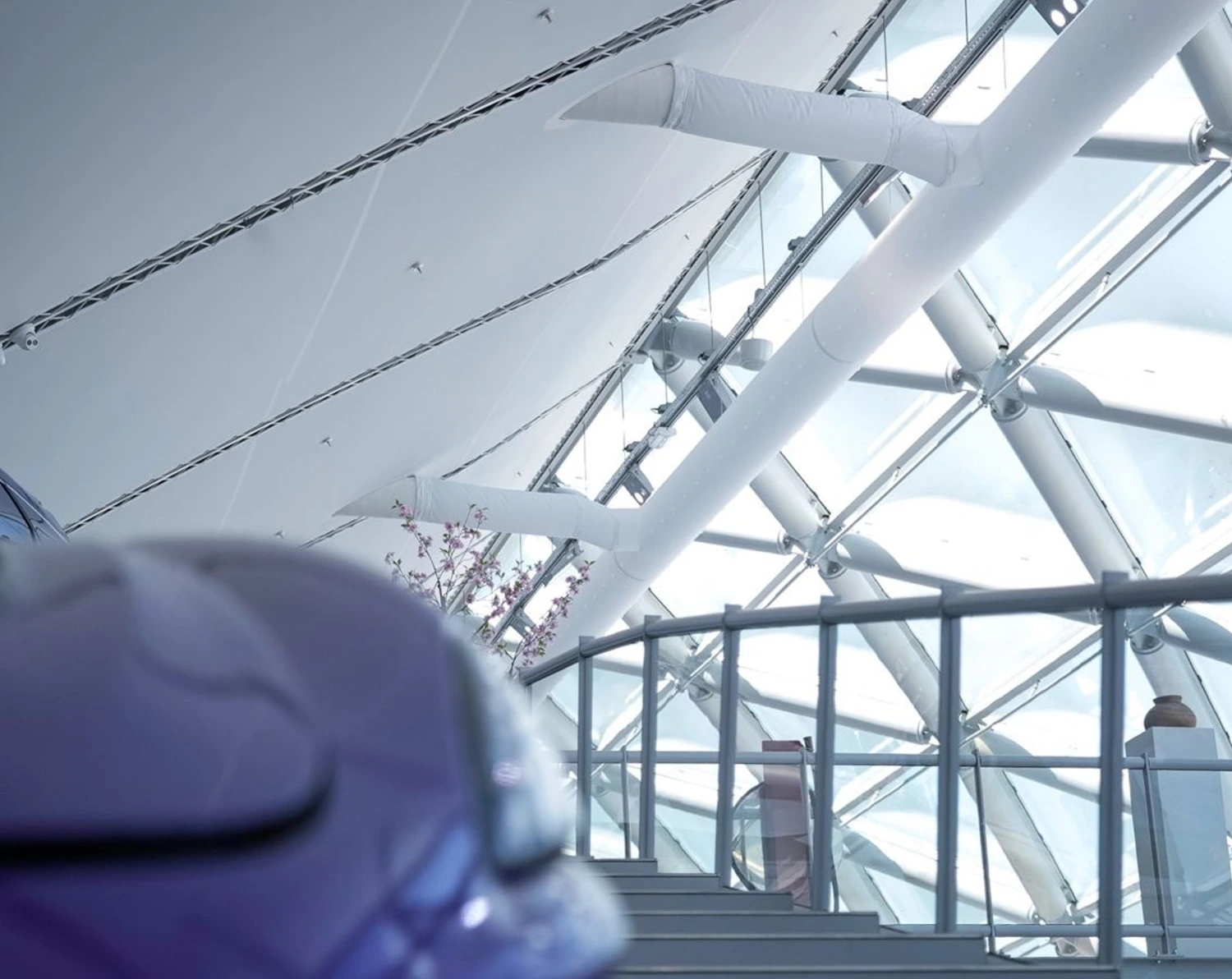
The hybrid solution combines dense but air-permeable fabrics with KE-Direjet nozzles. It prevents condensation and dust on the ducts and ensures that both hot and cold air can be distributed efficiently and comfortably in the room.
Industrial refrigeration is a general term for refrigeration in industrial enterprises where maximum air speeds in the room are needed.