South Mimms Motorway Services
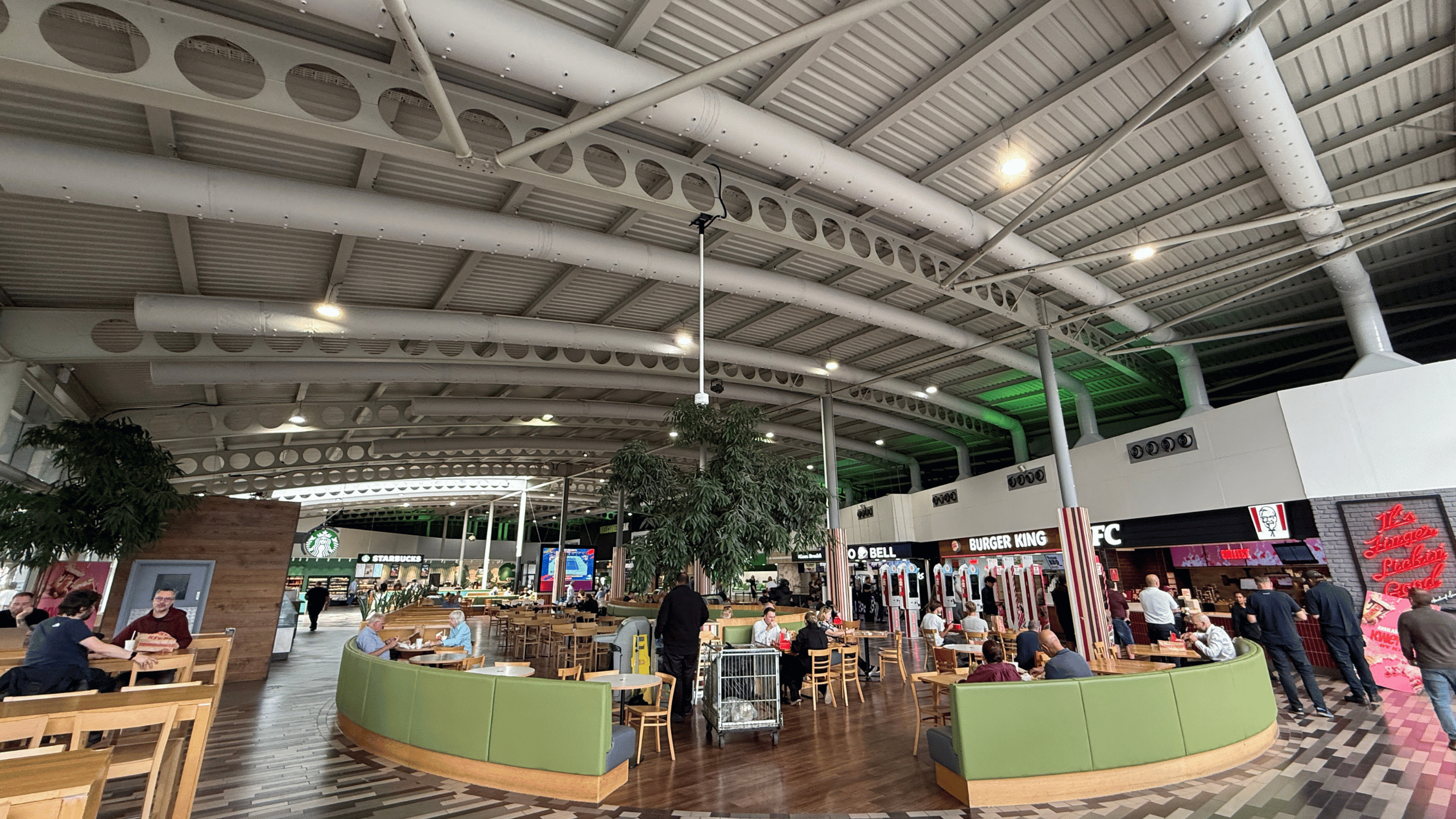
Textile Ducting Through a Complex Roof Structure
Working with KEKI Group, KE Fibertec designed and supplied a textile air distribution system for South Mimms Motorway Services, combining precise 3D coordination with an engineered solution for delivering heating and cooling effectively into the occupied zone.
The challenge
South Mimms Motorway Services presented a particularly interesting air distribution challenge.
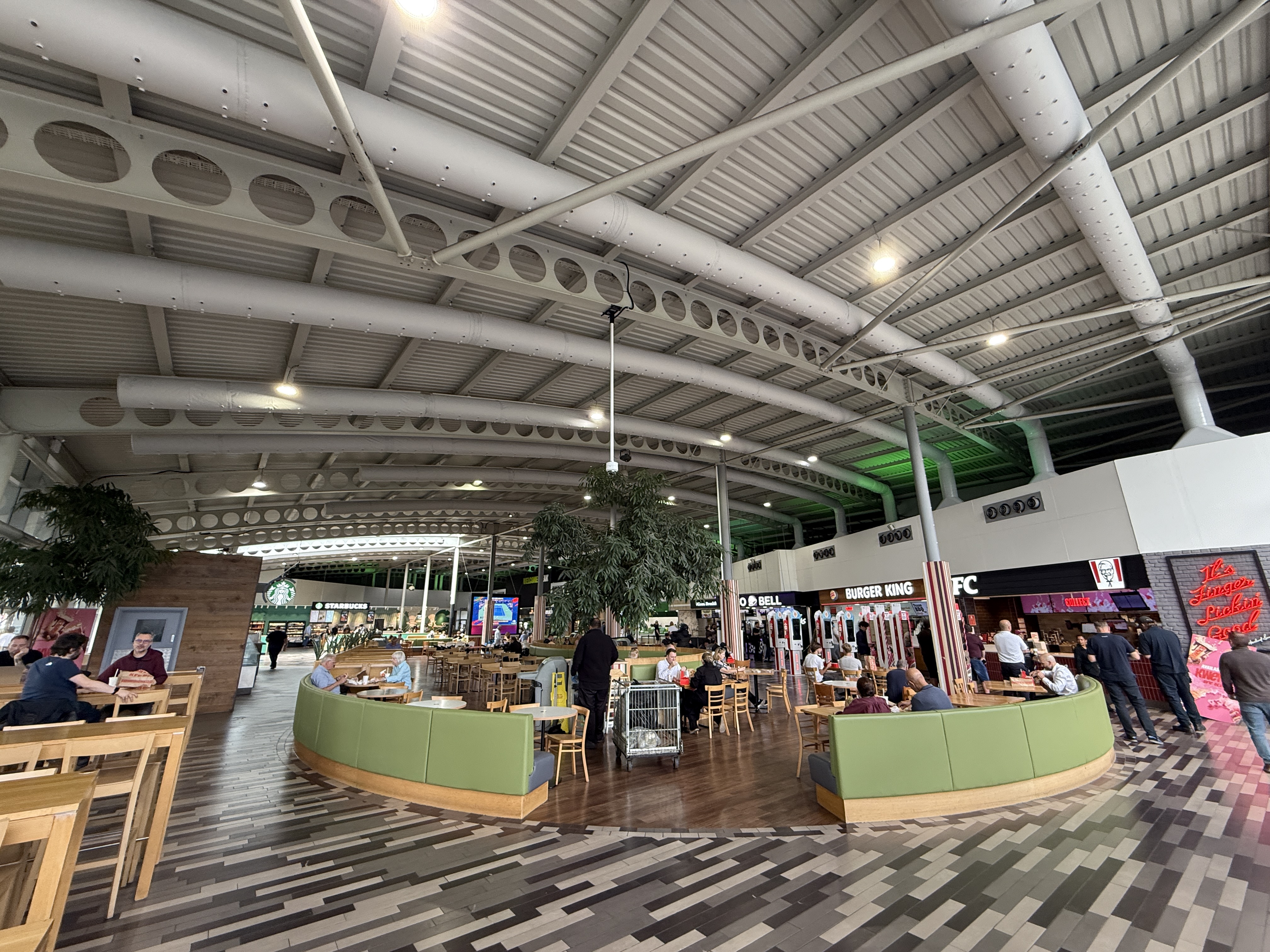
The large open concourse has an extensive exposed roof structure, with the ventilation system positioned high above the occupied areas below. Effective air distribution therefore needed to overcome the potential for stratification, particularly in heating mode, and deliver conditioned air where it was actually required.
The structure itself added another level of complexity.
The textile ducts needed to pass through openings in the building's castellated beams before continuing along the changing slope of the roof. With little margin for error, the position, geometry and changes in angle of each duct run had to be carefully coordinated before manufacture.
Designing around the building
Working with KEKI Group, the proposed textile ductwork was coordinated in 3D to establish how each run would interact with the existing building structure.
The model allowed the duct routes, bends and transitions to be developed before manufacture, ensuring that the textile system could pass through the castellated beam openings and then follow the roof profile across the concourse.
This was particularly important on a project where relatively small changes in duct direction were required to follow the structure accurately.
The 3D visualisations also provided a clear representation of how the finished system would sit within the building, allowing the design to be reviewed before the textile ducts were manufactured.
Delivering air to the occupied zone
ZeroWeave fabric was selected for the project so that the supply air would be delivered through the specifically designed active areas of the textile ducts.
The system incorporates DireJet aerodynamic nozzles, providing the momentum required to distribute conditioned air effectively from roof level towards the occupied zone.
This combination allowed the air distribution pattern to be engineered around the requirements of the space, helping to reduce the risk of warm air remaining at high level during heating operation.
Maintaining the duct shape
Because the textile ducts pass through the castellated beam structure, maintaining their shape was also an important consideration.
Safe360 internal support rings were incorporated within the ducts to maintain their circular form during periods of reduced or zero airflow.
As well as maintaining the appearance of the textile ducts, this helps prevent the fabric from sagging onto the surrounding structural beams when the ventilation system is operating at reduced airflow or is switched off.
The ducts are suspended from a single continuous track, providing a clean and practical suspension system throughout the exposed installation.
From 3D design to completed installation
The completed system closely follows the geometry established during the design process.
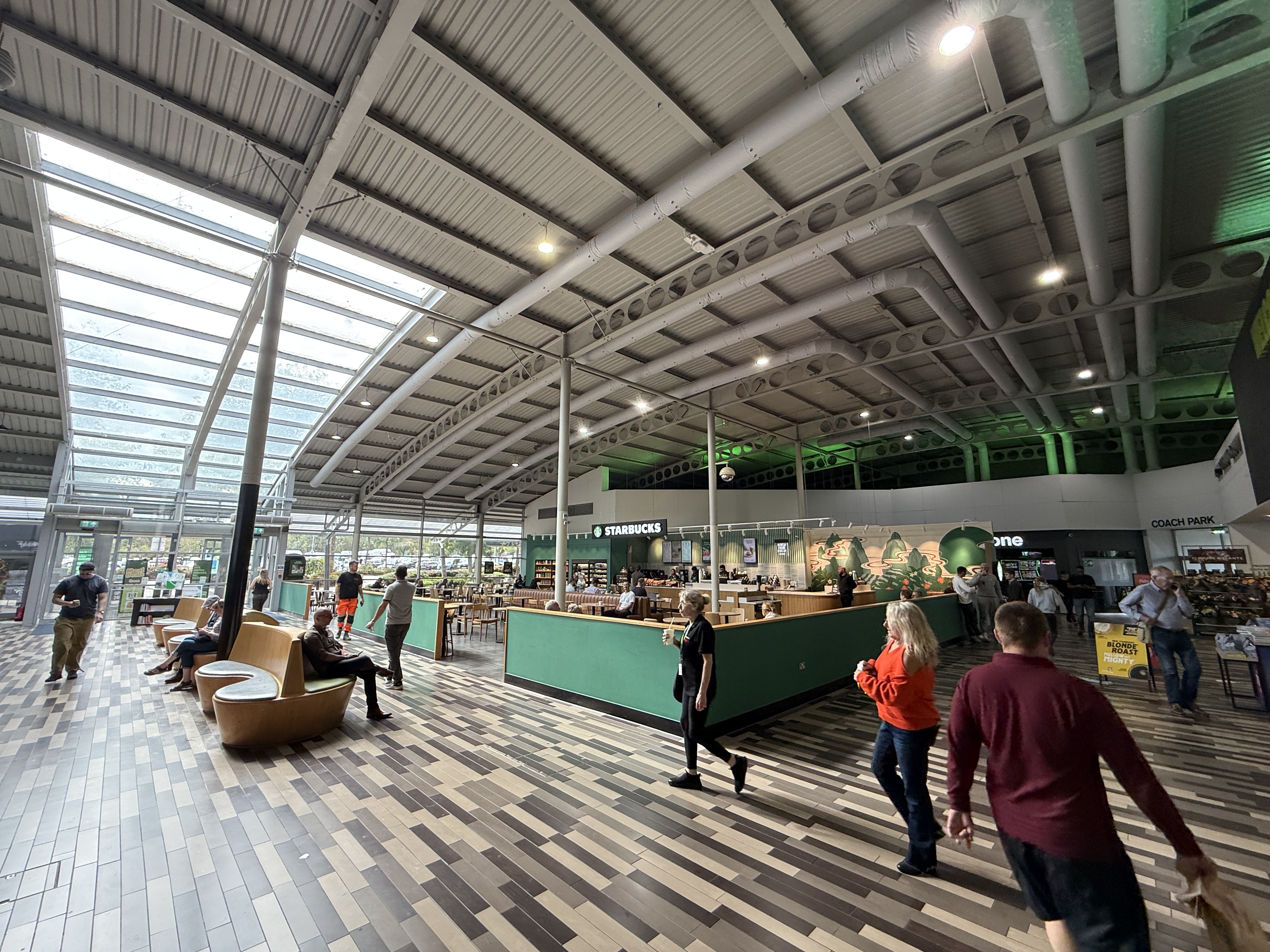
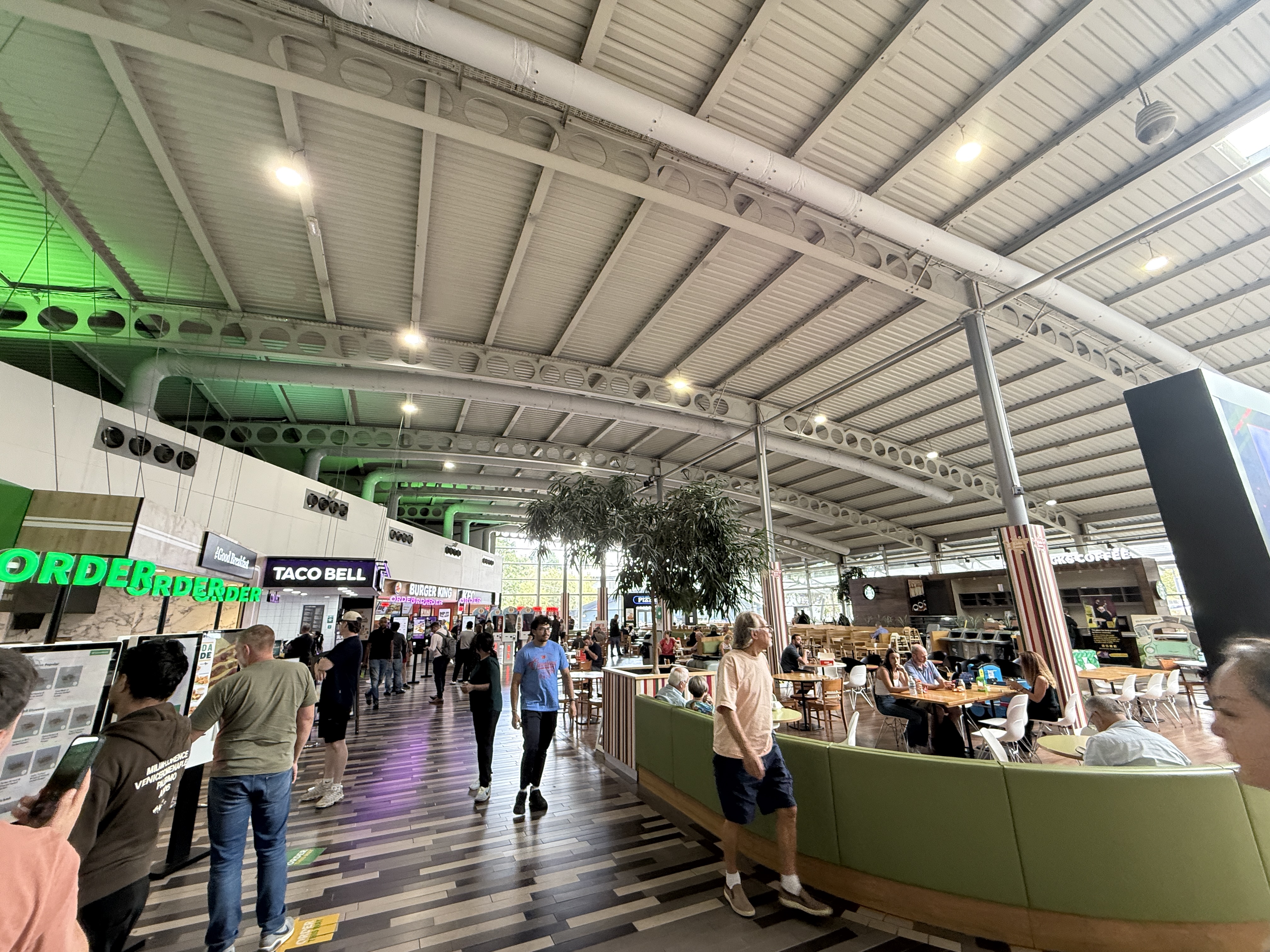
Long textile duct runs pass through the castellated beam zones before following the changing roof profile, demonstrating how textile ductwork can be manufactured around complex building geometry rather than requiring the building to accommodate a conventional rigid duct system.
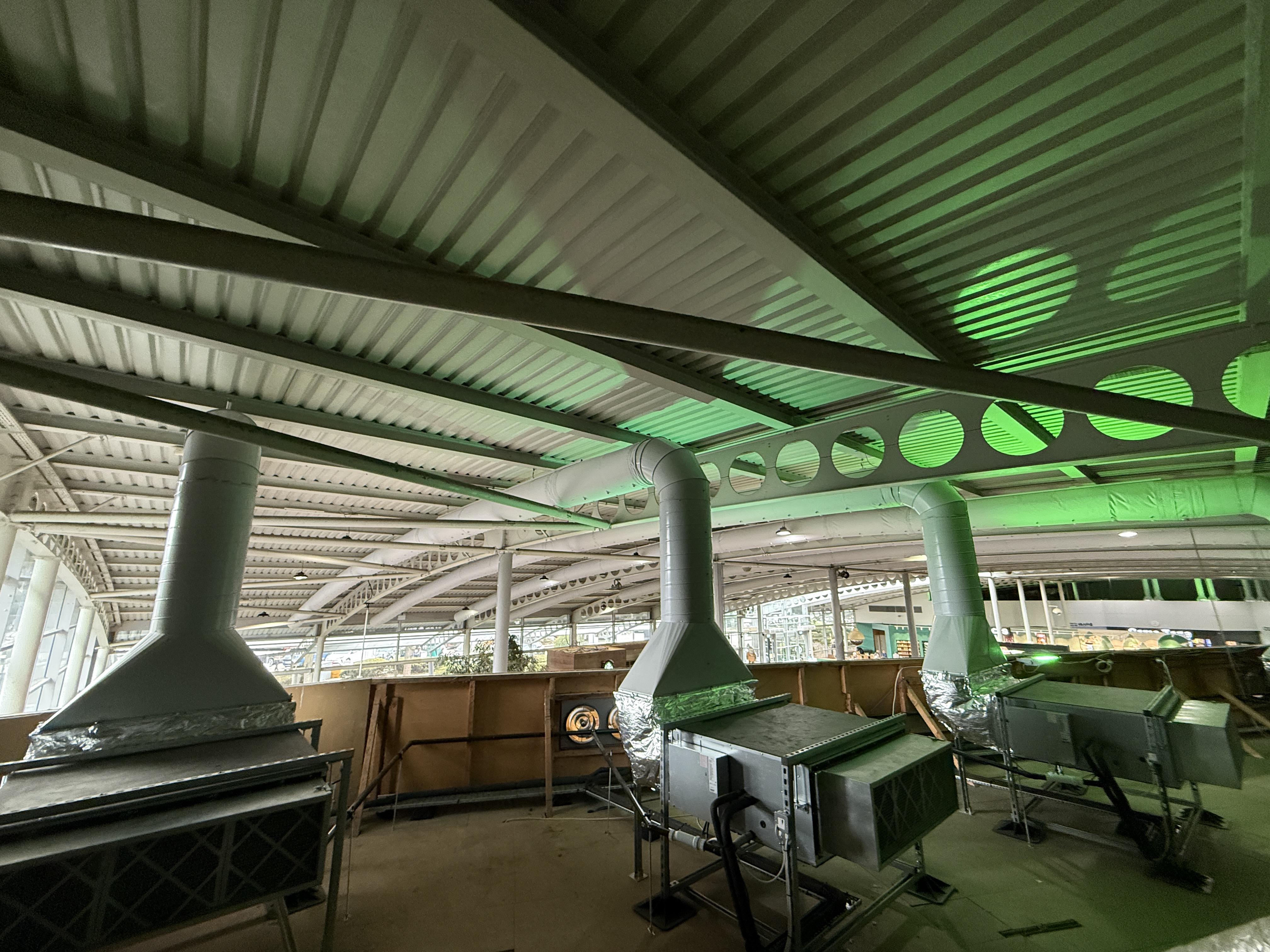
The coordination also extended to plant level, where the connections and transitions from the mechanical equipment into the textile distribution system formed part of the overall design.
Finished in light grey, the textile ducts integrate naturally with the existing steelwork while remaining a visible part of the building's high-level services.
An engineered solution for a complex public space
The South Mimms project demonstrates how textile air distribution can combine airflow engineering with the flexibility required for a structurally complex and highly visible environment.
By coordinating the system in 3D before manufacture, KE Fibertec and KEKI Group were able to develop a solution that followed the architecture of the building while delivering conditioned air effectively into the occupied space below.
Project highlights
- ZeroWeave textile ducting
- DireJet aerodynamic nozzles
- Safe360 internal support rings
- Single-track suspension
- 3D coordinated before manufacture
- Routed through castellated beam openings
- Purpose-designed to follow the changing roof profile
- Designed to distribute heating and cooling into the occupied zone
Project: South Mimms Motorway Services
Contractor: KEKI Group
Textile air distribution: KE Fibertec UK
Could textile air distribution work for your next project?
From straightforward installations to complex buildings requiring detailed coordination, KE Fibertec designs and manufactures textile air distribution systems around the individual requirements of each project.
Contact KE Fibertec UK to discuss your next ventilation project.

Are you ready to optimize your indoor climate?
Ready to save time on your next project. Fill out the form and be contacted within 24 hours. You will receive non-binding advice from our technical experts.